 how-to
How to Reduce Payment Delays in Service Business
Table of Contents
- Why Payment Delays Drain Your Cash Flow
- Step 1: Set Clear Payment Terms for Service Contracts
- Step 2: Invoice Immediately After Job Completion
- Step 3: Use Automated Payment Reminders Strategically
- Step 4: Create Effective Late Payment Email Templates
- Step 5: Offer Multiple Payment Methods and Early Payment Incentives
- Step 6: Implement Client Vetting Before Work Begins
- How to Reduce Payment Delays: Common Mistakes to Avoid
Last Updated: August 8, 2026
Why Payment Delays Drain Your Cash Flow
Payment delays directly impact your ability to pay crew wages, buy materials, and reinvest in growth. A single client who delays payment by 30 days can cascade into cash shortages that force you to slow down operations or take on unnecessary debt.
Many service businesses operate on thin margins. When invoices sit unpaid for weeks, you're essentially financing your clients' projects with money already spent on labor, equipment, and materials. According to [research on small business cash flow(https://blog.solvpro.com/why-manual-invoicing-hurts-cash-flow) challenges | sba.gov], payment delays rank among the top reasons service businesses struggle to scale.
This guide from SolvPro covers six proven strategies to reduce payment delays in your service business: setting clear payment terms, automating reminders, implementing client vetting, and more. The goal is simple: get paid faster so you can focus on delivering excellent service.
Step 1: Set Clear Payment Terms for Service Contracts
The foundation of faster payments is clarity. Vague payment terms create confusion, and confusion creates delays. Your service contract should spell out payment terms explicitly: "Payment is due within 30 days of invoice date. Send payment to [specific address or payment portal]."
Include these elements in every contract:
- Exact due date (not "when convenient")
- Accepted payment methods (check, ACH, credit card, online portal)
- Where and how to submit payment
- Late payment consequences (if applicable)
- Early payment incentives (if you offer them)
A written contract protects both you and the client, removes ambiguity, and gives you legal standing if payment becomes a serious problem.
Net 30 vs Net 15 Payment Terms: Which Works Best
Net 15 means payment is due 15 days after the invoice date. Net 30 means payment is due 30 days after the invoice date. Net 15 is more aggressive and gets you paid faster, ideal if you have strong cash flow needs or work with established commercial clients. Net 30 is more client-friendly and often expected in service industries, particularly for larger projects or government agencies.
The choice depends on your business model. For small residential jobs, Net 15 works well. For larger commercial projects requiring multiple approval layers, Net 30 is more realistic. A practical approach: offer Net 15 as your standard, but be willing to negotiate to Net 30 for larger contracts or valued clients.
Step 2: Invoice Immediately After Job Completion
The longer you wait to invoice, the longer you wait to get paid. Many service businesses let invoices sit for days or weeks after completing work because invoices are created in the office while crews are still in the field.
Invoice on the same day the work is finished. If possible, invoice while the client is still on-site. This reinforces the value of the work and sets the payment clock in motion immediately.
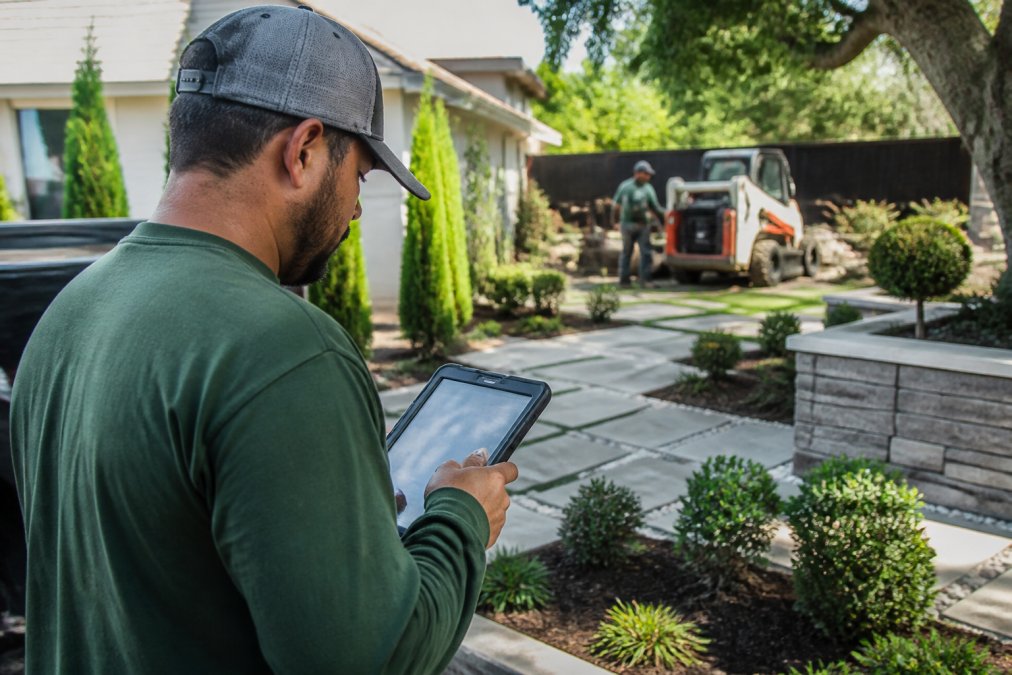
Digital invoicing tools make this much easier. SolvPro's mobile platform lets your team create and send invoices from the job site, so clients receive them the same day work is completed. When invoices go out faster, payment follows faster. Clients see the invoice when the work is fresh in their mind, which increases the likelihood they'll process payment promptly.
Make invoicing part of your job completion checklist. Train your crews to understand that finishing the job means the invoice goes out that day.
Step 3: Use Automated Payment Reminders Strategically
Most payment delays happen because invoices get lost, forgotten, or buried in an inbox. Automated reminders solve this problem without requiring manual follow-up.
Use a structured reminder sequence:
- First reminder: 2-3 days before the due date (gentle heads-up)
- Second reminder: On the due date (friendly reminder that payment is now due)
- Third reminder: 5-7 days after the due date (more direct follow-up)
- Fourth reminder: 15 days after the due date (escalation; may include late fees)
This sequence gives clients multiple opportunities to pay without feeling harassed. Automated reminders also remove emotion from the collection process, keeping relationships professional.
Step 4: Create Effective Late Payment Email Templates
Your payment reminder emails should be professional but friendly. A good late payment email has three components: acknowledgment, reminder, and call to action.
Acknowledgment: Reference the specific work or project to remind clients what they're paying for.
Reminder: State the amount due and the original due date. Be specific and factual.
Call to action: Make it easy for them to pay. Provide multiple payment methods and clear instructions.
Here's a template you can adapt:
Subject: Payment Reminder - Invoice #[invoice number]
Hi [Client Name],
I wanted to follow up on invoice #[invoice number] for [project description]. The total of $[amount] was due on [due date].
We haven't received payment yet. If you've already sent it, please disregard this note. If payment is pending, we'd appreciate it if you could process it this week.
You can pay online at [portal link], mail a check to [address], or call [phone] to arrange payment.
Thank you for your business.
Best regards, [Your name]
This template is direct without being aggressive. It assumes the client may have simply forgotten or missed the deadline.
Step 5: Offer Multiple Payment Methods and Early Payment Incentives
The easier you make it to pay, the faster you get paid. Offer at least three payment methods:
- Online payment portal (fastest; client pays immediately)
- ACH transfer (fast; typically processes within 1-2 business days)
- Credit card (convenient for clients; you may pay processing fees)
- Check (traditional; slower but still acceptable)
Online payment portals are the gold standard. They're fast, secure, and require minimal effort from the client.
Early payment incentives also work. Offering a 2% discount if payment is received within 10 days instead of 30 improves cash flow significantly. For most service businesses, that's a worthwhile trade-off.
Step 6: Implement Client Vetting Before Work Begins
The best way to reduce payment delays is to avoid working with clients who delay payment. Vet clients before you start work, not after.
Client vetting has two components: financial capacity and payment history.
Financial capacity means the client has the ability to pay. A homeowner with a $50,000 annual income shouldn't finance a $20,000 project. Before signing a contract, understand whether the client can realistically afford the work.
Payment history means checking whether the client has a track record of paying contractors on time. Ask for references from previous contractors. Ask directly: "How do you typically handle payment for service work?" Clients who hesitate or give vague answers are warning signs.

For commercial clients, run a basic credit check through services like Dun & Bradstreet. For residential clients, ask about previous contractor experiences and who's responsible for payment.
You can also require a deposit before starting work. A 25-50% deposit on residential projects and 33-50% on commercial projects reduces your risk significantly and signals that payment is important to you.
How to Reduce Payment Delays: Common Mistakes to Avoid
Vague payment terms. Assuming clients understand "net 30" leads to confusion. Write it out explicitly with specific dates.
Delayed invoicing. Waiting days or weeks to invoice gives clients an excuse to delay payment. Invoice the same day work is completed.
No follow-up system. Set up automated reminders so follow-up happens consistently without requiring manual effort.
Accepting only checks. Checks are slow. Online payment options cut payment time in half.
Ignoring warning signs. If a client seems disorganized, defensive about pricing, or vague about payment, they're likely to delay. Trust your instincts.
Not discussing payment upfront. Discuss payment during the initial consultation. "How do you prefer to handle payment?" prevents confusion later.
Underestimating the impact. Payment delays directly impact your ability to pay crews and grow the business. Treat them as a serious operational issue.
Getting paid faster isn't just about better invoicing. It's about building systems that make payment automatic and friction-free. When you combine clear payment terms, same-day invoicing, automated reminders, and client vetting, payment delays become rare.
SolvPro's all-in-one platform helps service businesses eliminate the operational chaos that causes payment delays. With digital contracts, mobile invoicing, QuickBooks Online integration, and bilingual support, your team can finish jobs faster and get paid sooner. Start your free trial today and see how much faster your cash flow can move.
Frequently Asked Questions
What's the fastest way to reduce payment delays in a service business?
Invoice immediately after completing the job, don't wait for paperwork to reach the office. Pair this with clear payment terms stated upfront in your service agreement, automated payment reminders sent before and after the due date, and a payment portal where clients can pay instantly. Together, these steps can cut payment delays from weeks to days. Many service businesses see a 30-50% improvement in cash flow speed within the first month.
Should I use net 30 or net 15 payment terms for service contracts?
Net 15 is better for reducing payment delays if your clients can accommodate it. Net 15 gets you paid two weeks faster than net 30, which significantly improves working capital. However, if your competitors or industry standard is net 30, jumping to net 15 may hurt your competitiveness. Start with net 15 for new clients and gradually shift existing clients. If cash flow is critical, offer a 2-3% early payment discount to incentivize payment within 10 days, this often pays for itself through faster cash conversion.
What should I include in a late payment email template?
A late payment email should be professional but direct. Include the invoice number, original due date, current balance owed, and a specific payment deadline (e.g., 5 business days). Avoid guilt-tripping language; instead, assume the payment was overlooked. Provide a direct payment link and multiple payment methods. Example opening: 'We noticed invoice #1234 for $2,500 is now 5 days past the due date of [date]. Please submit payment by [new date] to keep your account in good standing.' Always include your contact information for questions.
How does payment delay impact a small service business?
Payment delays directly reduce liquidity and force you to cover operating costs, payroll, fuel, equipment, materials, out of pocket while waiting for client payments. A 30-day delay on a $10,000 job means you're funding that job yourself for a month. For small businesses with thin margins, this creates cash flow stress that can prevent hiring, purchasing equipment, or taking on new jobs. Reducing delays by just 10 days can free up thousands in working capital and eliminate the need for expensive short-term financing.
This article was written using GrandRanker