 listicle
Mobile Work Order Apps for Technicians: Key Benefits
Table of Contents
- How Mobile Work Order Apps Help Technicians Work Faster
- Work Order Software for Technicians: Real-Time Updates and Visibility
- Mobile Work Order App Features That Drive Technician Productivity
- Digital Work Orders: Eliminating Paper and Reducing Errors
- Work Order Tracking Software: Staying Connected with the Office
- Improving First-Time Fix Rates and Customer Satisfaction
- Making the Shift from Spreadsheets to Mobile Apps
- Frequently Asked Questions
Last Updated: October 17, 2026
How Mobile Work Order Apps Help Technicians Work Faster
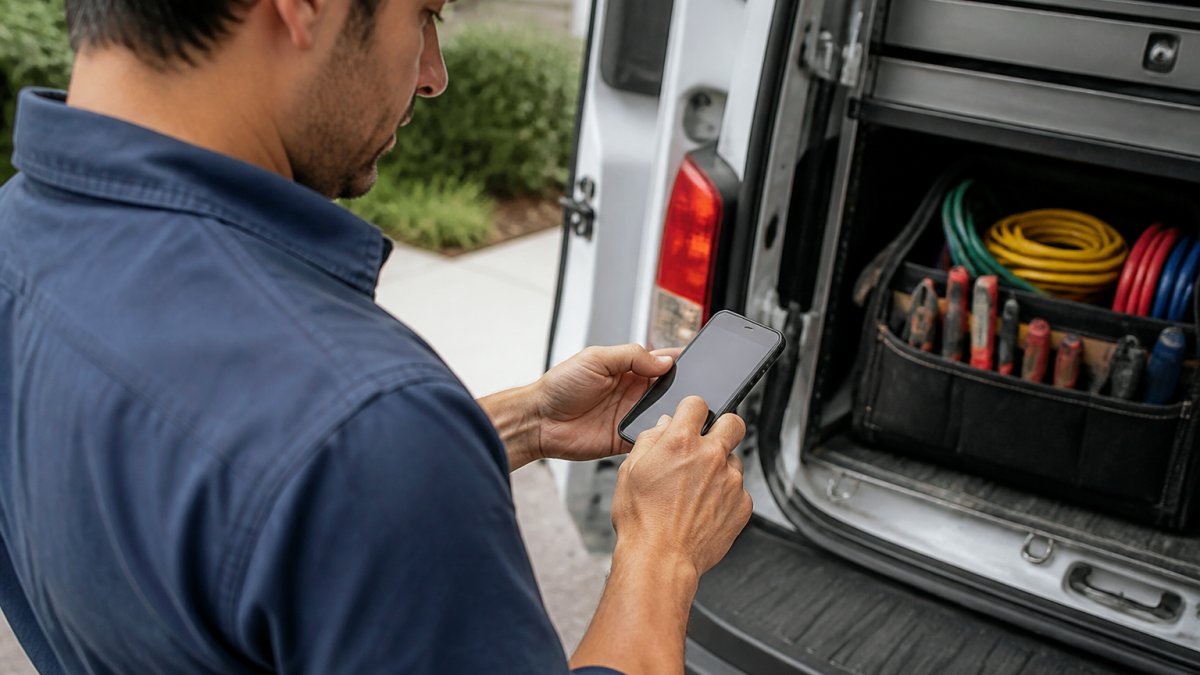
Mobile work order apps technicians use are transforming how field service teams do their jobs. Instead of waiting for printed paperwork or hunting through email, technicians access everything they need on their phone or tablet.
With complete job details, customer history, and material lists before arriving on-site, technicians start work immediately, no calls back to the office, no mid-job surprises.
Work Order Software for Technicians: Real-Time Updates and Visibility
Real-time updates keep everyone on the same page. When a technician completes a task, updates the status, or notes a problem, that information flows back to the office instantly, no end-of-day batch uploads, no lost data sitting in a truck.
What "real-time" actually changes for a technician
A technician's day is often fragmented by information gaps: waiting for a job packet, calling the office to confirm scope, or driving back for a part. Real-time updates close those gaps in three ways:
- Status changes propagate immediately. When a technician taps "en route," "on site," "paused," or "complete," the dispatcher sees it without a phone call. That single change removes the most common interruption in a technician's day, the check-in call.
- Job details can be amended mid-job. If a customer adds a request or the office discovers a warranty note, the update reaches the technician's device before the next task, not after the invoice is written.
- Notes and photos attach to the job record at the moment of capture. The technician does not have to remember details later or reconstruct the visit from memory.
Quantifying the technician-level payoff
Measuring the impact of mobile work order apps can help you understand the gains for your team. Consider tracking these indicators:
| Indicator | How to measure before and after |
|---|---|
| Time to close a work order | Median minutes from "arrived on site" to "marked complete" over a 30-day window |
| Jobs completed per shift | Count of closed work orders per technician per shift, averaged weekly |
| Administrative time | Self-reported minutes per day spent on paperwork, calls to the office, and re-entry |
| Repeat visits | Share of jobs requiring a second trip within 14 days |
| First-time fix rate | Share of jobs closed without a return visit |
Real-time visibility as an audit trail
Real-time updates also create a timestamped record of who did what, when, and where. For technicians working under safety or compliance requirements, lockout/tagout procedures, refrigerant handling logs, or equipment inspection checklists, capturing a timestamp, photo, and checklist at the moment of work produces documentation paper rarely matches.
If your team handles regulated work, configure required fields (photo, checklist, signature) before a job can be marked complete. This turns the app into a compliance tool, not just a scheduling tool.
Where real-time updates fall short
Real-time is only as good as the connection. In basements, rural routes, and metal-framed buildings, updates queue locally and sync when the device reconnects. Dispatchers should not treat a stale status as proof a technician is idle, build a short grace period into dispatch decisions and check the last-sync timestamp before reassigning work.
The bottom line for technicians
The technician benefit is not "the office can see me." It is "I do not have to call the office." Every status update, note, and photo that flows automatically is a phone call the technician does not make.
Mobile Work Order App Features That Drive Technician Productivity
The best mobile work order apps technicians rely on share a core set of features designed for the field, not nice-to-have extras, but the foundation that makes field work faster and more accurate. The features that move the needle survive a real technician's day: spotty signal, a dying battery, and a mid-job scope change.
Offline access, sync behavior, and conflict handling
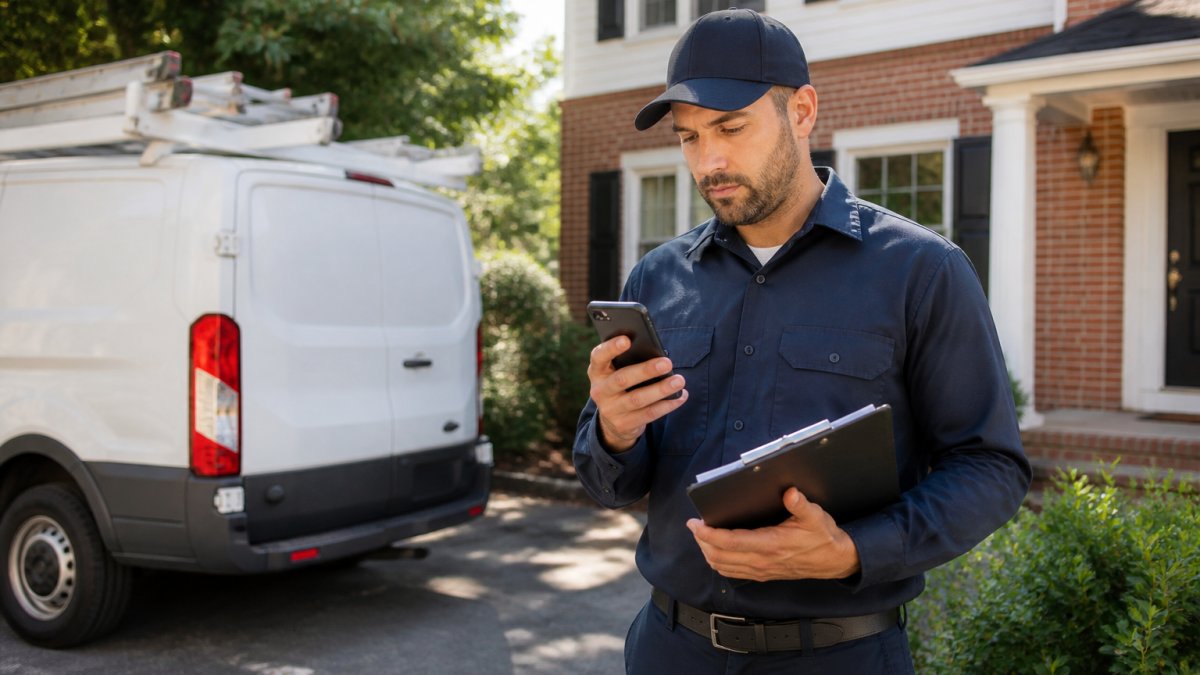
Connectivity in the field is inconsistent, and an app that requires constant internet becomes useless the moment signal drops.
Offline access solves this problem, but the details matter more than the checkbox. A useful offline mode should:
- Pre-cache the full job packet (customer info, equipment history, prior photos, checklists, and parts list) before the technician leaves the last connected location.
- Queue writes locally so status changes, notes, photos, and material logs are stored on the device and pushed when signal returns.
- Define a conflict rule. If the office edits a job while the technician is offline, the app should flag the conflict rather than silently overwrite either version. A common pattern is to keep both versions and require the technician to confirm which is correct.
- Show a last-sync timestamp so the technician and dispatcher both know how fresh the data is.
Test offline behavior on the devices your team actually uses, not just on a demo phone. Sync bugs tend to appear on older hardware and low-storage devices first.
Device and battery realities
A mobile work order app is only as reliable as the phone running it. Technicians often work 8-12 hour shifts, sometimes in heat or cold, with no charging opportunity mid-day. Practical considerations:
- Battery drain from GPS, camera, and background sync adds up. Look for apps that let you reduce location polling frequency or pause background sync when not needed.
- Storage fills quickly with photos and cached job packets. Apps should compress images and let you clear completed job data.
- Rugged cases and screen readability in sunlight matter more than most software demos suggest.
- Shared devices are common on some crews; the app should support fast user switching without leaking one technician's data to the next.
Photo capture and documentation
A picture replaces pages of written description. Before-and-after photos of damage, completed repairs, or customer-requested changes become part of the permanent job record.
This documentation protects both the business and the customer. If a dispute arises later, you have visual proof of the work performed, and photos help the next technician understand job history without lengthy explanations.
Time tracking and material logging
Accurate time tracking starts with the app. A technician clocks in on arrival and out on departure, no manual timesheets later, no guessing about how long a job took. Field Time Tracking ensures your team's hours are captured automatically and accurately.
Material logging works the same way. As a technician uses parts or supplies, they log them in the app, giving the office visibility into consumption and reordering and ensuring invoices reflect actual materials used.
Technician adoption and change management
The feature list is the easy part. The harder question is whether your technicians will actually use the app after the first week, rollouts often see initial enthusiasm followed by a quiet drift back to text messages and paper notes. What prevents that drift:
- Involve technicians in the pilot. Pick two or three respected technicians to test the app and report friction before company-wide rollout.
- Train on the technician's workflow, not the admin's. Show how the app saves them a phone call, a trip back to the shop, or a dispute over a completed job.
- Keep the first version small. Roll out work orders, photos, and time tracking first; add inventory, estimates, and customer notifications later.
- Name a champion on each crew. Peer support resolves most day-to-day questions faster than a help desk.
- Measure and share the wins. If the pilot crew closes jobs faster or makes fewer repeat visits, show that to the rest of the team.
The features that drive technician productivity are the ones technicians actually use under real field conditions. Prioritize offline reliability, device-friendly design, and a rollout plan that treats adoption as a feature, not an afterthought.
Digital Work Orders: Eliminating Paper and Reducing Errors
Paper-based work orders create friction at every step.
Digital work orders eliminate these handoffs. Information flows directly from the office system to the technician's phone and back. No transcription, no lost pages, no re-entry of data.
The accuracy improvement is immediate. When office staff create a work order once and it appears on the technician's phone exactly as written, errors drop significantly, no misread handwriting, no billing for the wrong service.
This efficiency also speeds up invoicing. Once a job is marked complete in the app, the invoice can be generated automatically, the customer gets billed faster, and your cash flow improves.
Work Order Tracking Software: Staying Connected with the Office
Work order tracking software creates a communication channel between field and office that paper systems never had.
This connection reduces downtime. If a job finishes early, the dispatcher immediately assigns the next one, and if a customer calls about their appointment, the office can give an accurate arrival time based on real-time tracking.
The tracking data also reveals patterns. Over time, you can see which technicians are fastest, which jobs take longer than expected, and where bottlenecks occur, helping with scheduling, training, and resource planning based on actual performance data.
Improving First-Time Fix Rates and Customer Satisfaction
A first-time fix means the technician solves the problem on the first visit. No return trips. No callbacks. Just satisfied customers.
That preparation prevents surprises. A technician who knows the full context makes better decisions and brings the right parts.
Customer satisfaction follows naturally. Faster service, fewer callbacks, and prepared technicians build trust and loyalty, customers are more likely to call back and recommend the business.
Making the Shift from Spreadsheets to Mobile Apps
Many field service businesses start with spreadsheets. A manager maintains a list of jobs, assigns them manually, and tracks progress through email updates.
As the business grows, spreadsheets become a bottleneck.
A mobile work order app replaces this manual process with automation. Jobs flow into the system. Assignments happen with a few clicks. Updates come in automatically.
The transition requires some adjustment as your team learns the new system, but the payoff comes quickly.
The key is choosing software designed for your business type. It handles the core functions you need, scheduling, work orders, crew tracking, and payments, without overwhelming you with features meant for larger enterprises.
| Feature | Spreadsheet Approach | Mobile Work Order App |
|---|---|---|
| Real-time updates | Manual, delayed | Instant |
| Offline access | Not possible | Available |
| Photo documentation | Separate files, disorganized | Attached to job record |
| Time tracking | Manual entry | Automatic |
| Customer history | Difficult to search | Instantly accessible |
| Dispatch speed | Hours or days | Minutes |
| Error rate | High | Low |
The shift to mobile work order apps isn't about adopting technology for its own sake. It's about eliminating the friction that slows your team down.
Frequently Asked Questions
What are the main benefits of mobile work order apps for technicians?
Mobile work order apps let technicians access job details instantly, update work orders from the field in real time, and eliminate paper-based processes. Technicians spend less time on administrative tasks and more time completing jobs. Real-time communication with dispatchers reduces delays, and offline access ensures they can work even without connectivity. The result is faster job completion, fewer errors, and better customer communication.
How do mobile work order app features improve communication between technicians and dispatchers?
Mobile work order apps create a direct communication channel between field technicians and office staff. Technicians can send status updates, photos, and notes instantly. Dispatchers see real-time progress and can reassign jobs or send new instructions without delay. This two-way visibility eliminates miscommunication, reduces repeat visits, and ensures jobs stay on schedule. Bilingual support in apps like SolvPro also helps teams communicate clearly across language barriers.
Can mobile work order apps actually speed up cash flow and invoicing?
Yes. When technicians complete work orders digitally in the field, data flows directly to the office without manual data entry. Invoices can be generated immediately after job completion instead of waiting days for paperwork to reach the office. Some work order tracking software integrates with accounting platforms, automating billing. This compressed timeline means invoices reach customers sooner and payment cycles accelerate significantly.
What should I look for in work order software for technicians?
Look for offline access so technicians can work without internet connectivity. Mobile work order app features should include photo and signature capture, time logging, and material tracking. The app should sync data automatically when connectivity returns. Real-time status updates and two-way communication with dispatchers are essential. If your team speaks multiple languages, bilingual support matters. Integration with your existing accounting software prevents duplicate data entry and saves time.