 listicle
Is Digital Billing Secure for Small Contractors?
Table of Contents
- Is Digital Billing Secure for Small Contractors?
- Encryption and Data Protection Standards in Digital Invoicing
- Best Payment Processing for Contractors: What Matters
- Digital Billing Best Practices to Reduce Risk
- How to Prevent Invoice Fraud and Unauthorized Access
- Digital vs. Paper Invoicing: Security Comparison
- Cybersecurity Insurance for Small Contractors
- Conclusion
Last Updated: August 11, 2026
Is Digital Billing Secure for Small Contractors?
Small contractors face a critical choice: stick with paper invoices and checks, or move to digital billing. Payment security directly affects cash flow, fraud risk, and timely payment. Digital billing is demonstrably more secure than paper when implemented correctly, but "secure" requires the right tools, practices, and awareness. Modern digital billing platforms include encryption, multi-factor authentication, and fraud detection that paper invoices cannot match.
Below, we'll break down the security landscape for digital billing, show you what separates secure platforms from risky ones, and give you a practical roadmap for protecting your invoices and payments.
Encryption and Data Protection Standards in Digital Invoicing
Encryption is the foundation of digital billing security. When your invoice data travels from your device to a payment processor, encryption scrambles it into unreadable code that only authorized parties can decode. Most modern billing platforms use 256-bit TLS (Transport Layer Security) encryption, the same standard banks use, protecting data in transit. Encryption at rest protects data stored on servers. Platforms like QuickBooks Online and FreshBooks use bank-level encryption for both.
The Payment Card Industry Data Security Standard (PCI DSS) sets the baseline for payment data protection. Platforms handling credit card payments must comply with PCI Level 1 certification, the highest standard. FreshBooks and Wave Accounting both maintain PCI DSS Level 1 compliance, meaning they've undergone rigorous third-party audits.
If a platform doesn't explicitly state its encryption standard or PCI compliance status, that's a red flag. Legitimate providers are transparent about security certifications because they're a competitive advantage.
Best Payment Processing for Contractors: What Matters
Choosing the right payment processor shapes your entire security posture. A processor handles the actual exchange of money and holds the most sensitive data: card numbers, bank account information, and transaction history.
Multi-Factor Authentication and Identity Verification
Multi-factor authentication (MFA) adds a second verification step beyond your password. After entering your password, you receive a code via text, email, or authenticator app that you must enter to access your account. This prevents unauthorized access even if someone steals your password.
Zoho Invoice and Stripe both require MFA as a standard feature. For contractors managing invoices on mobile devices, which are more vulnerable to theft or compromise, MFA is essential.
Identity verification goes deeper. When a client pays an invoice, they need to prove their identity through matching billing address to card on file, checking CVV codes, and monitoring for suspicious transaction patterns. Square Invoices and Stripe both run real-time fraud detection on every transaction, flagging unusual activity before money changes hands.
PCI Compliance and Payment Gateway Security
A payment gateway is the bridge between your invoice and the client's bank, making it the highest-risk point in the payment chain. Gateways must be PCI compliant to legally process payments. Stripe, Square, and PayPal all maintain PCI Level 1 certification.
PCI compliance protects card data, but you still need to protect your invoices and login credentials. A secure payment gateway won't help if someone gains access to your account and creates fraudulent invoices in your name. This is why MFA and strong passwords matter alongside gateway security.

Digital Billing Best Practices to Reduce Risk
Security requires ongoing practices that protect your account, data, and payment flow. The platforms with the strongest encryption and compliance certifications still require you to use them correctly.
Real-Time Tracking and Digital Audit Trails
Real-time tracking shows you exactly what's happening with every invoice: when it was sent, when the client opened it, when payment was received. This visibility prevents fraud because you can spot discrepancies immediately.
Digital audit trails create a permanent record of every action in your billing system. Who accessed the invoice? When was it modified? Was payment processed or refunded? QuickBooks Online provides real-time invoice status updates and detailed audit logs. If a client claims they never received an invoice, you have proof of exactly when they opened it.
Offline Backup Protocols and Data Recovery
Digital systems depend on internet connectivity and server availability. Offline backup protocols ensure you never lose critical information. Many contractors keep a local backup of recent invoices on their device. Platforms like Wave Accounting and FreshBooks allow you to export invoice data regularly, giving you a secondary copy you control. Store these exports on an encrypted external drive or secure cloud storage separate from your primary billing platform.
Data recovery matters when accidents happen. FreshBooks keeps 30-day backup history, allowing you to recover deleted or modified invoices within a month.
How to Prevent Invoice Fraud and Unauthorized Access
Invoice fraud is the most common financial crime targeting small contractors. An attacker gains access to your billing account, creates fake invoices to your regular clients, and directs payments to a fraudulent account.
Prevention starts with account security. Use a strong, unique password for your billing platform. Enable multi-factor authentication on every account that offers it. Review login activity regularly to spot unauthorized access attempts.
Phishing and Social Engineering Awareness
Phishing is the most effective way attackers gain access to billing accounts. They send you an email that looks like it's from your billing platform, asking you to "verify your account" or "confirm payment details."
The defense is skepticism. Legitimate platforms never ask you to verify credentials via email. If you receive a suspicious email, don't click any links. Instead, go directly to the platform's website by typing the URL yourself and check your account security. Most phishing emails have telltale signs: generic greetings, urgent language, requests to act immediately, or slightly misspelled domain names.
Social engineering is the human version of phishing. An attacker calls your office claiming to be from your billing platform's support team, asking for your password or account details. Legitimate support teams never ask for passwords. If you receive such a call, hang up and call the platform's official number directly.

Secure Payment Links and Remote Processing
Secure payment links are a modern solution to a classic problem: clients who don't pay because they lose invoices or forget about them. A secure payment link is a unique URL you send to each client that takes them directly to a payment page pre-filled with the invoice amount. They don't need to log in anywhere; they just enter payment details and pay.
Payment links reduce fraud because they're tied to specific invoices and amounts. The link expires after payment, preventing reuse. Square Invoices and Stripe both provide secure payment links with built-in fraud detection. When a client clicks the link and enters payment details, the system runs real-time verification checks before processing the payment.
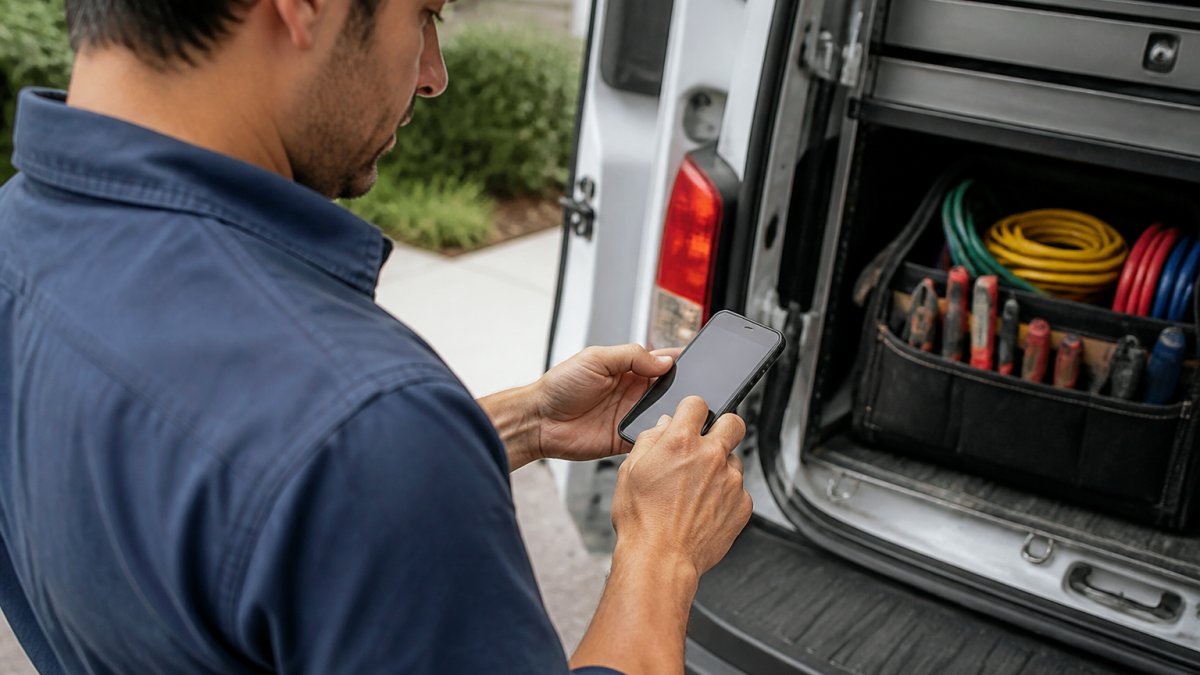
Remote processing means clients can pay from anywhere, on their phone, from the job site, without needing to visit your office or mail a check. This speeds up cash flow and eliminates the vulnerability of physical checks sitting in trucks or offices.
Digital vs. Paper Invoicing: Security Comparison
Paper invoices are vulnerable at every stage: creation, delivery, storage, and payment processing. A paper invoice can be lost, stolen, or intercepted in the mail. Once sent, you have no proof the client received it. Payment comes via check, which can be lost, forged, or delayed in the mail for weeks.
Digital invoicing eliminates these vulnerabilities. Invoices are encrypted in transit, verified upon delivery, and paid through secure gateways with fraud detection. You have proof of delivery, real-time payment status, and automatic reconciliation. If a payment fails, you know immediately and can follow up the same day.
Digital billing is more secure, faster, and provides better visibility into your payment status.
Cybersecurity Insurance for Small Contractors
Even with strong security practices, breaches happen. Cybersecurity insurance protects your business if your billing system is compromised and client data is exposed.
Cybersecurity insurance typically covers costs associated with a data breach: notification expenses, credit monitoring for affected clients, legal fees, and liability claims. If a breach exposes client financial information, you're legally responsible for notifying them and often for covering remediation costs.
Many contractors assume their general business insurance covers cybersecurity incidents. It doesn't. You need dedicated cyber liability coverage. Policies start around a few hundred dollars annually for small businesses, scaling with your revenue and data exposure.
The bottom line: Digital billing is secure when you choose platforms with encryption, PCI compliance, and multi-factor authentication, and when you practice good account hygiene. The combination of platform security features and your own vigilance, strong passwords, phishing awareness, offline backups, creates a defense system that paper invoicing cannot match.
SolvPro integrates with secure payment platforms like QuickBooks Online, giving you centralized invoicing with enterprise-grade security built in. By combining field service management with secure digital billing, you eliminate the vulnerability of paper invoices sitting in trucks and reduce the time between completing work and getting paid. Start your free trial to see how digital billing accelerates your cash flow while protecting your financial data.
| Platform | Encryption | MFA | PCI Compliance | Best For |
|---|---|---|---|---|
| QuickBooks Online | 256-bit TLS | Yes | Level 1 | Comprehensive accounting with strong security |
| FreshBooks | 256-bit SSL | Optional | Level 1 | Freelancers prioritizing ease of use |
| Wave Accounting | 256-bit TLS | Yes | Level 1 | Budget-conscious startups |
| Square Invoices | Integrated | Yes | Level 1 | Contractors already using Square ecosystem |
| Zoho Invoice | 256-bit TLS | Yes | Multiple certifications | Small businesses needing free option |
PCI Security Standards Council compliance requirements
Federal Trade Commission guidance on data security and breach notification
NIST Cybersecurity Framework for small business security practices
Frequently Asked Questions
Is digital billing actually safer than paper checks for contractors?
Yes, digital billing offers stronger security than paper checks. Digital platforms use encryption to protect data in transit and at rest, multi-factor authentication to verify user identity, and create a permanent digital audit trail of all transactions. Paper checks can be lost, forged, or intercepted. Digital billing also reduces human error and provides real-time tracking of payment status, making it harder for unauthorized parties to access or alter invoices.
What security features should I look for in contractor invoicing software?
Prioritize platforms with bank-level encryption (256-bit SSL or TLS), multi-factor authentication, PCI DSS Level 1 compliance, and role-based access controls. Verify that the software uses secure payment gateways and offers automated reconciliation to catch discrepancies. Look for digital signature capabilities to prevent forgery, real-time transaction tracking, and the ability to generate detailed audit trails. Ask providers about their data backup and recovery protocols, and confirm they comply with relevant financial regulations.
How do I know if a payment platform is PCI-DSS compliant?
PCI DSS (Payment Card Industry Data Security Standard) compliance means the platform meets strict security standards for handling card data. Check the vendor's website for a PCI DSS compliance statement or certification letter. Reputable platforms like QuickBooks Online, FreshBooks, Wave Accounting, and Stripe clearly display their compliance status. Ask your provider directly for proof of certification and the level they maintain (Level 1 is the highest). Never process card payments through platforms that cannot verify PCI compliance.
What are the most common security risks in digital billing for contractors?
The biggest risks include phishing attacks targeting login credentials, weak passwords that enable unauthorized access, unencrypted data transmission, and employee negligence. Data breaches can expose client financial information and invoices. Unsecured payment links are vulnerable to interception. Offline backups may not exist, leaving you vulnerable to ransomware. Using outdated software or failing to enable multi-factor authentication also increases risk. Small contractors are frequent targets because they often have fewer security protocols than larger firms.
Can digital billing help me get paid faster as a contractor?
Yes. Digital billing accelerates payment collection through automated payment reminders, secure payment links that clients can access immediately, and real-time tracking of invoice status. Platforms like SolvPro integrate with field service workflows so invoices are sent the moment a job is completed, eliminating delays from paperwork sitting in trucks. Automated reconciliation speeds up bookkeeping, and some platforms support multiple payment methods (credit cards, bank transfers, ACH) so clients pay faster. Faster invoicing and payment processing directly improves cash flow.
This article was written using GrandRanker