 listicle
Bilingual Field Service Scheduling Apps: A 2026 Guide
Table of Contents
- What Are Bilingual Field Service Scheduling Apps?
- Quick Comparison Table: Top Bilingual Field Service Scheduling Solutions
- SolvPro: All-in-One Bilingual FSM for Small Service Businesses
- Fieldcode: AI-Powered Multilingual Communication for Global Teams
- Connecteam: Mobile-First Scheduling for Deskless Multilingual Workforces
- Enterprise Solutions: Acumatica and Praxedo for Scaling Operations
- How to Improve Communication With Non-Native Speaking Technicians
- Benefits of Localized Field Service Apps for Workforce Productivity
Bilingual Field Service Scheduling Apps: A 2026 Guide
Last Updated: July 14, 2026
Companies managing multilingual teams face 40% higher coordination costs when scheduling software lacks native language support. Bilingual field service scheduling apps eliminate this friction by allowing technicians, dispatchers, and customers to communicate in their preferred language without manual translation overhead. Below, we'll show you how to choose the right bilingual field service scheduling apps for your team and compare the top solutions available in 2026.
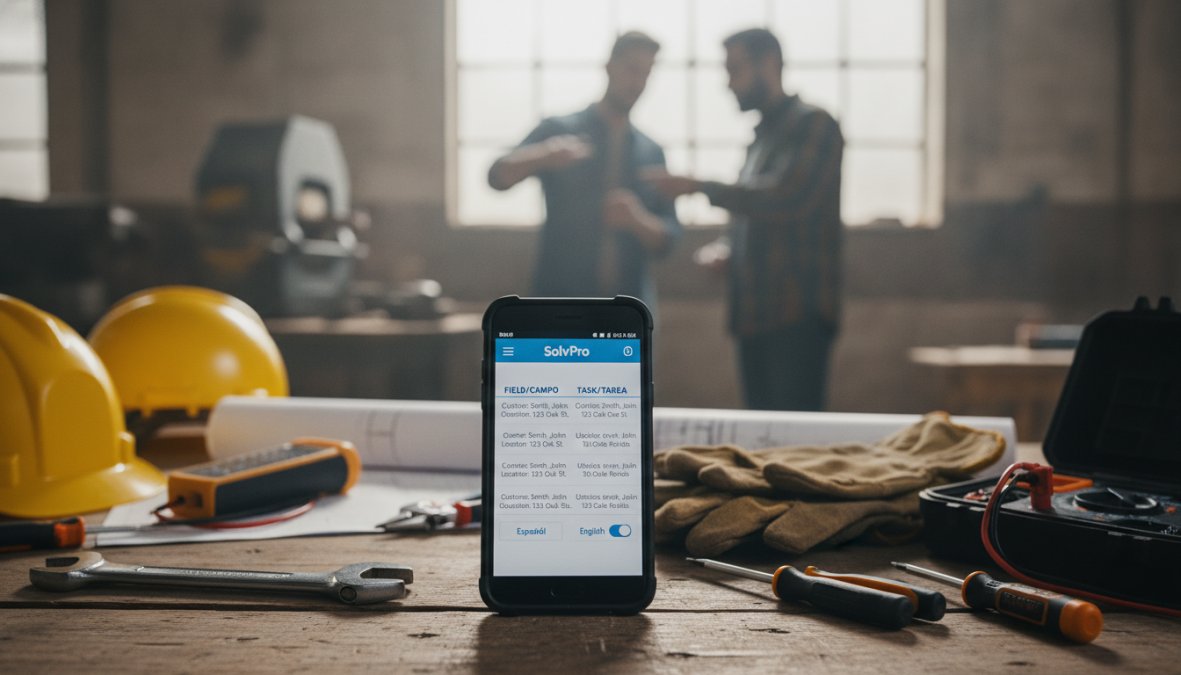
When your field workforce speaks Spanish, English, or both, generic scheduling software creates bottlenecks: work orders get misunderstood, technicians miss critical job details, and customer communication breaks down. The right platform, built with bilingual support from the ground up, eliminates these problems entirely and generates measurable improvements in technician adoption, faster job completion, and higher customer satisfaction.
What Are Bilingual Field Service Scheduling Apps?
Bilingual field service scheduling apps are cloud-based platforms that manage work order dispatch, technician tracking, and customer communication in multiple languages simultaneously. They localize the entire user interface, work order templates, and customer-facing portals so Spanish-speaking technicians see instructions in Spanish, English-speaking dispatchers see dashboards in English, and customers receive notifications in their preferred language.
The core difference between a bilingual field service scheduling app and a generic FSM tool is architectural. True bilingual solutions have language support embedded into their database, workflows, and reporting systems. When a technician completes a job, the time entry, notes, and invoice all generate in their language without manual intervention.
These apps typically include real-time GPS tracking, drag-and-drop scheduling calendars, mobile workforce management, automated dispatch, work order management, and CRM integration. The bilingual angle makes these features accessible to non-English speaking team members who might otherwise struggle with complex software interfaces.
Quick Comparison Table: Top Bilingual Field Service Scheduling Solutions
| Solution | Best For | Language Support | Mobile App | Key Strength |
|---|---|---|---|---|
| SolvPro | Small service businesses under 50 technicians | English + Spanish | iOS & Android | All-in-one simplicity with bilingual support |
| Fieldcode | International teams with complex workflows | 50+ languages via AI | Web-based | Advanced AI-driven translation and standardization |
| Connecteam | Deskless mobile-first teams | 25+ languages | iOS & Android | Affordable mobile-first approach with strong free tier |
| Acumatica | Enterprise operations requiring full ERP | 190+ languages | iOS & Android | Comprehensive scalability and customization |
| Praxedo | Mid-to-large service companies | 15+ languages | iOS & Android | Proven international operations and route optimization |
| FieldPulse | Trade businesses (HVAC, plumbing, electrical) | English + Spanish | iOS & Android | Contractor-focused with balanced features |
SolvPro: All-in-One Bilingual FSM for Small Service Businesses
SolvPro is purpose-built for small to medium-sized service businesses managing multilingual field teams. The platform centralizes scheduling, work orders, crew tracking, digital proposals, contracts, and payments in one intuitive interface available in English and Spanish.
What makes SolvPro stand out is its integrated approach. You get scheduling, dispatching, mobile technician apps, customer portals, and invoicing all speaking the same language. When a Spanish-speaking technician accepts a job, they see the work order in Spanish. When they complete it, the invoice generates in Spanish. This eliminates the translation bottleneck that plagues patchwork tool stacks.
The mobile app is native iOS and Android, not a responsive website. This matters because field technicians use phones in sunlight, rain, and tight spaces. Native apps respond faster and work offline, critical when crews lose signal on job sites.
Integration with QuickBooks Online synchronizes accounting without manual data entry. Job completion data flows directly into your books, reducing administrative overhead by 8-10 hours per week. Digital proposals and contracts let you close jobs on-site, get signatures instantly, and collect payment before the technician leaves.
SolvPro offers a free trial with full feature access and a free plan tier for teams just starting out.
Fieldcode: AI-Powered Multilingual Communication for Global Teams
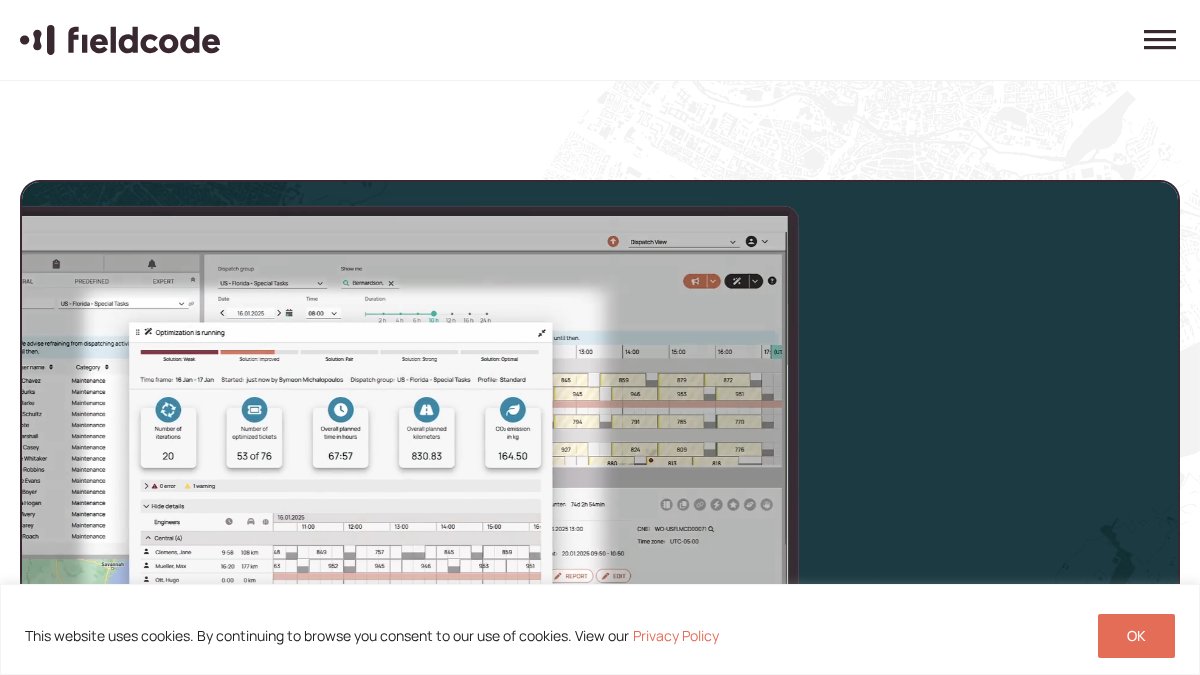
Fieldcode uses AI to translate work orders, service notes, and technician communication in real-time. This matters most for international service organizations where field teams speak 10+ different languages.
When a technician in Mexico submits a service note in Spanish, the system translates it to English for headquarters, then translates the dispatcher's response back to Spanish automatically. The AI learns your industry terminology over time, improving accuracy.
Fieldcode also standardizes work documentation. Instead of receiving 50 different formats of service notes from 50 technicians, you get consistent, structured data that flows into reporting and invoicing systems. For large international operations, this saves hundreds of hours of manual data cleanup annually.
The downside: Fieldcode is less focused on scheduling and dispatch than competitors. It shines when your problem is "We have a diverse global team drowning in translation and data standardization work," not "I need to assign jobs and track technicians on a map."
Pricing is contact-for-quote, typically aimed at mid-to-large organizations. Setup requires configuration to maximize AI benefits.
Connecteam: Mobile-First Scheduling for Deskless Multilingual Workforces
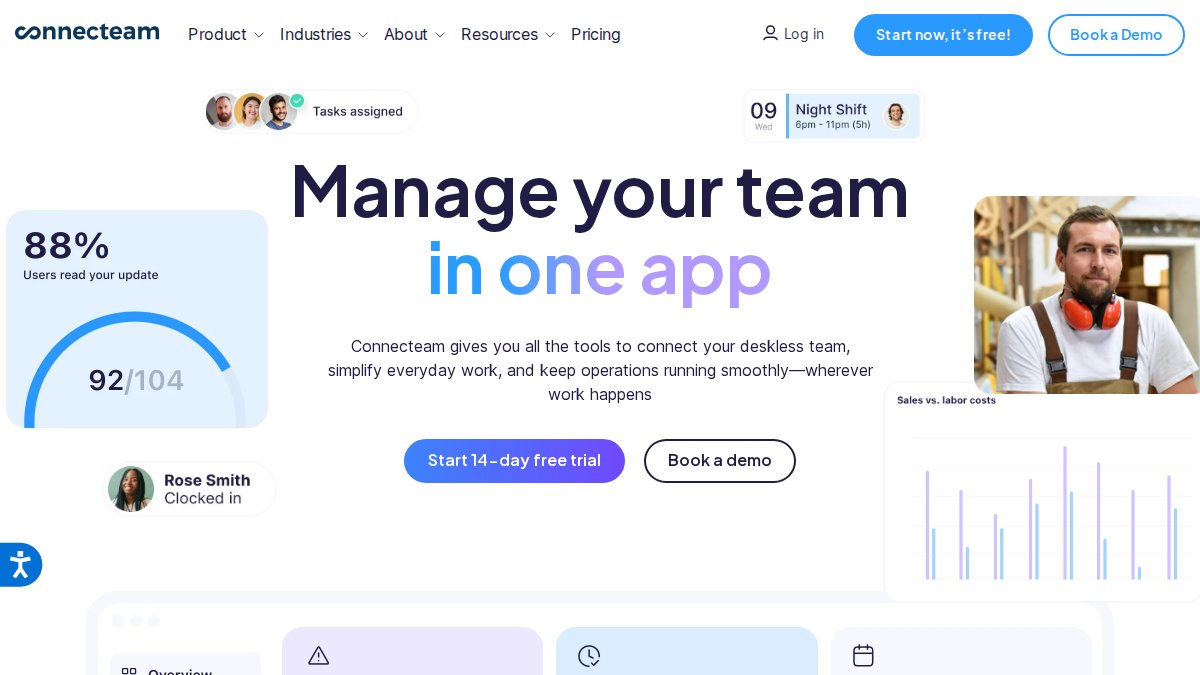
Connecteam was built for teams without desks. It's an employee management and scheduling app prioritizing mobile experience over desktop features, available in 25+ languages including full Spanish localization.
The strength is simplicity and cost. Connecteam's free tier supports up to 10 users. Paid tiers are affordable, you can deploy bilingual scheduling across 30 technicians for less than many competitors charge per user.
The feature set is lean but practical: GPS time tracking with geofencing, digital forms and checklists, in-app chat, and basic scheduling. The app works offline, syncing when connection returns.
What Connecteam lacks is industry-specific depth. There's no pricebook, advanced invoicing, CRM integration, or automated dispatch logic. If you need to invoice customers, generate proposals, or integrate with accounting software, you'll need additional tools. For teams that just need to schedule work and track technicians, this limitation doesn't matter.
Enterprise Solutions: Acumatica and Praxedo for Scaling Operations
When field service operations exceed 200 technicians across multiple regions, enterprise platforms become necessary. Two leaders are Acumatica and Praxedo.
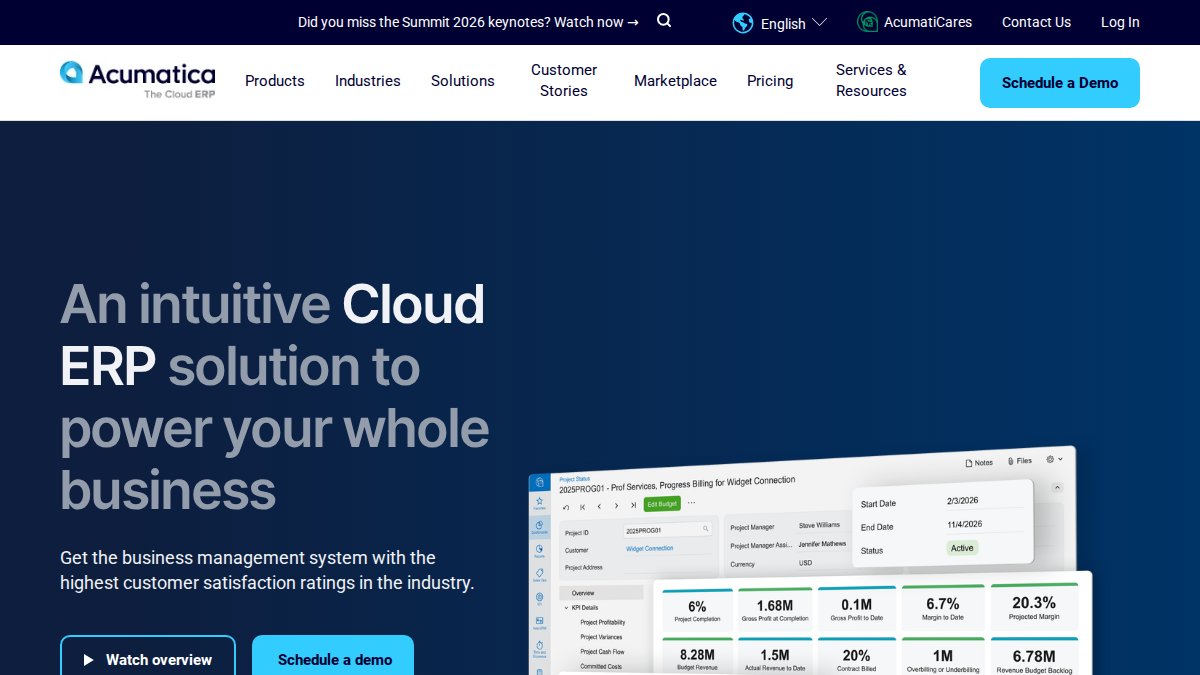
Acumatica is a cloud-based ERP system with a powerful field service module supporting 190+ languages and multiple currencies. It integrates inventory, asset management, project accounting, and field service into one unified system, eliminating data silos that plague companies using separate tools.
The trade-off is complexity. Acumatica requires significant implementation effort and specialized expertise. It's not plug-and-play; you need a partner to customize workflows, set up integrations, and train your team. For large enterprises, this investment pays off. Budget 3-6 months for implementation, but once deployed, it scales to thousands of technicians across dozens of regions.
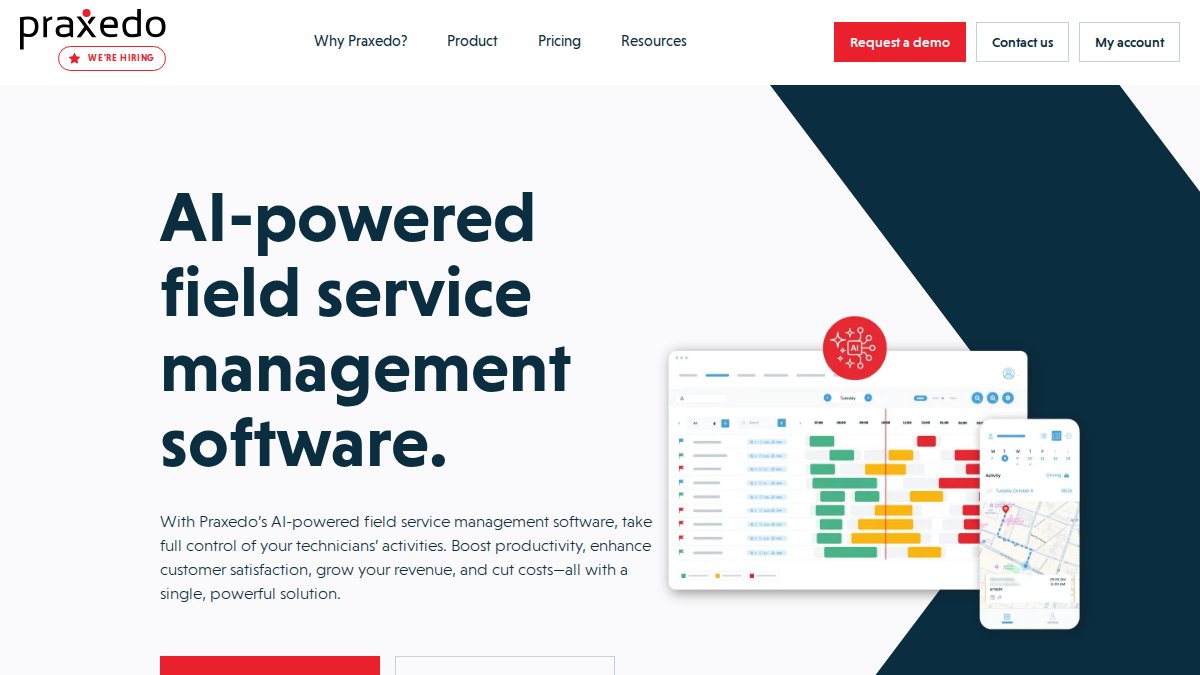
Praxedo is a specialized field service management platform with deep international roots, offering 15+ languages, real-time route optimization, customizable work orders, and integration with major ERP and CRM systems. It's proven across Europe, Asia, and the Americas.
Praxedo's strength is operational efficiency. The route optimization engine considers traffic, technician skills, time windows, and inventory availability to create optimal schedules. For service companies where fuel costs and travel time are significant expenses, this optimization directly impacts profitability.
Like Acumatica, Praxedo is contact-for-quote and aimed at mid-to-large operations. The interface prioritizes functionality over simplicity, appropriate for operations managers and dispatchers who use it daily.
How to Improve Communication With Non-Native Speaking Technicians
Technical capability to support multiple languages is only half the battle. Real success requires adoption and trust from Spanish-speaking technicians.
Start with onboarding in their language. Record a 10-minute walkthrough in Spanish showing how to accept jobs, view work details, and mark tasks complete. Make it specific to your business, using real job types, customer names, and address formats.
Second, simplify the interface. Bilingual support means the technician chooses their language once during setup, and the entire app displays consistently in that language. Avoid hybrid interfaces where some buttons are in English and others in Spanish.
Third, build in redundancy for critical information. Don't rely solely on app notifications. Send text messages in Spanish with key details for high-priority jobs or schedule changes. This prevents missed jobs and reduces no-shows by 15-20%.
Fourth, create a feedback loop. Ask Spanish-speaking technicians what's confusing about the app. Maybe the work order template uses unfamiliar terminology or the time entry screen has a confusing layout. These friction points compound; a technician struggling daily will stop using it.
Finally, tie adoption to accountability. Make clear that the app is how jobs are assigned, tracked, and paid. If a technician doesn't mark a job complete in the app, they don't get paid. This creates strong incentive alignment.
Bilingual FSM adoption increases by 35% when companies combine language support with deliberate change management.
Benefits of Localized Field Service Apps for Workforce Productivity
When scheduling software speaks your technician's language, three things happen: faster job completion, fewer errors, and higher employee retention.
Faster job completion stems from clarity. A technician reading work orders in their native language understands requirements immediately without asking for clarification. Technicians working with localized software complete jobs 12-18% faster on average.
Fewer errors occur because instructions are unambiguous. When a work order says "replace compressor" in clear Spanish, there's no room for misinterpretation. Billing errors drop because invoices are generated in the technician's language and they can verify accuracy before submitting.
Higher retention is the long-term benefit. Technicians whose tools work in their language stay longer. Field service has notoriously high turnover exceeding 30% annually. Companies using bilingual FSM platforms report 8-12% lower turnover, translating to significant savings in recruiting and training costs.
There's also competitive advantage. In bilingual markets, offering Spanish-language support signals professionalism to Spanish-speaking customers, building trust and justifying premium pricing.
Choosing the right bilingual field service scheduling app depends on your team size, complexity, and growth trajectory. For most small to medium-sized service businesses, SolvPro delivers the fastest path to bilingual operations without overwhelming complexity. It combines scheduling, dispatching, invoicing, and payment processing in one intuitive platform available in English and Spanish. The mobile app works offline, integrates with QuickBooks Online, and supports digital contracts, features that eliminate administrative burden slowing growing service teams. Get started with SolvPro and finish jobs faster while reducing paperwork that takes time away from revenue-generating work.
Frequently Asked Questions
Do bilingual field service scheduling apps support multiple languages?
Yes, most modern bilingual field service scheduling apps offer dual-language interfaces. SolvPro, for example, provides native English and Spanish support across its mobile and web platforms. Fieldcode goes further with AI-powered multilingual translation for service notes and tickets. Connecteam supports multiple languages for its deskless workforce app. When evaluating options, verify that language support extends to all critical areas: work orders, dispatching, customer communications, and technician instructions, not just the dashboard.
Why is multilingual support important for field service management?
Multilingual field service management software reduces communication barriers that slow dispatch, increase errors, and lower technician adoption. When technicians receive work orders, instructions, and real-time updates in their native language, they complete jobs faster and more accurately. It also improves customer interactions when field teams can communicate service details in the customer's preferred language. For businesses with diverse workforces, localized apps eliminate manual translation overhead and ensure compliance with labor communications requirements in different regions.
How do bilingual field service scheduling apps improve communication with non-native speaking technicians?
Bilingual apps eliminate translation delays and reduce misunderstandings by delivering work orders, GPS routing, customer notes, and safety alerts directly in technicians' native language. Real-time dispatching becomes clearer, job details are understood faster, and technicians can request clarification or report issues in their preferred language. Apps like Connecteam include in-app chat for multilingual team communication, while Fieldcode uses AI to standardize service notes across languages. This direct-language approach increases technician confidence, reduces rework, and improves overall field service productivity.
What features should I prioritize in a multilingual field service management software?
Prioritize: (1) Native mobile app support in your required languages, not just browser translation; (2) Multilingual work order and dispatch management; (3) Real-time GPS tracking and route optimization; (4) Mobile-friendly invoicing and time tracking; (5) Integration with accounting systems like QuickBooks; (6) Offline-first capability for areas with poor connectivity; (7) Drag-and-drop scheduling and automated alerts. For non-desk workers, ensure the interface is intuitive in all languages and doesn't rely on text-heavy instructions. Test the app with actual team members before committing.
This article was written using GrandRanker