 ultimate-guide
Sustainable Site Prep Logistics: A 2026 Guide
Table of Contents
- What Sustainable Site Preparation Logistics Means
- Assessing Your Current Supply Chain Operations and Environmental Impact
- Building Your Construction Site Logistics Plan
- Optimizing Construction Delivery Scheduling to Reduce Congestion
- Reducing Emissions Through Modal Shift and Alternative Fuels
- Using a Construction Site Sustainability Checklist for On-Site Controls
- Construction Waste Reduction and Material Traceability
- Measuring and Reporting Sustainability Performance
- Frequently Asked Questions
Last Updated: October 11, 2026
What Sustainable Site Preparation Logistics Means
Sustainable site prep logistics means planning material delivery, equipment movement, and waste management at construction sites to minimize environmental impact while maintaining operational efficiency, moving the right materials to the right place at the right time without unnecessary emissions, congestion, or waste.
Construction sites generate significant carbon footprints through transportation alone: trucks idling at congested sites, inefficient routing, partial deliveries, and poor staging all add up. Sustainable site prep logistics treats your supply chain as an integrated system rather than disconnected deliveries.
The most successful construction and excavation teams plan logistics before the first shovel hits the ground, mapping delivery zones, coordinating timing, and tracking materials digitally to eliminate waste and cost overruns.
Assessing Your Current Supply Chain Operations and Environmental Impact
Before you can improve, you need to see what's actually happening. Most teams operate blind, spreadsheets scattered across trucks, staff guessing at delivery times, no visibility into unused materials on-site.
Document your current state across three areas: material flow, transportation patterns, and waste streams. Track where materials come from, how they arrive, how long they sit, and where they end up.
Ask your crews: How many deliveries arrive late? How often do materials sit unused for over a week? How many truck trips per week? What percentage of delivered materials actually get used?
Transportation is often the biggest culprit: a truck making multiple half-full trips generates far more emissions per unit than one full truck making one trip.
Building Your Construction Site Logistics Plan
A solid logistics plan answers the critical questions before construction starts: When does each material arrive? Where does it stage? Who coordinates delivery? What's the backup plan if something arrives early or late?
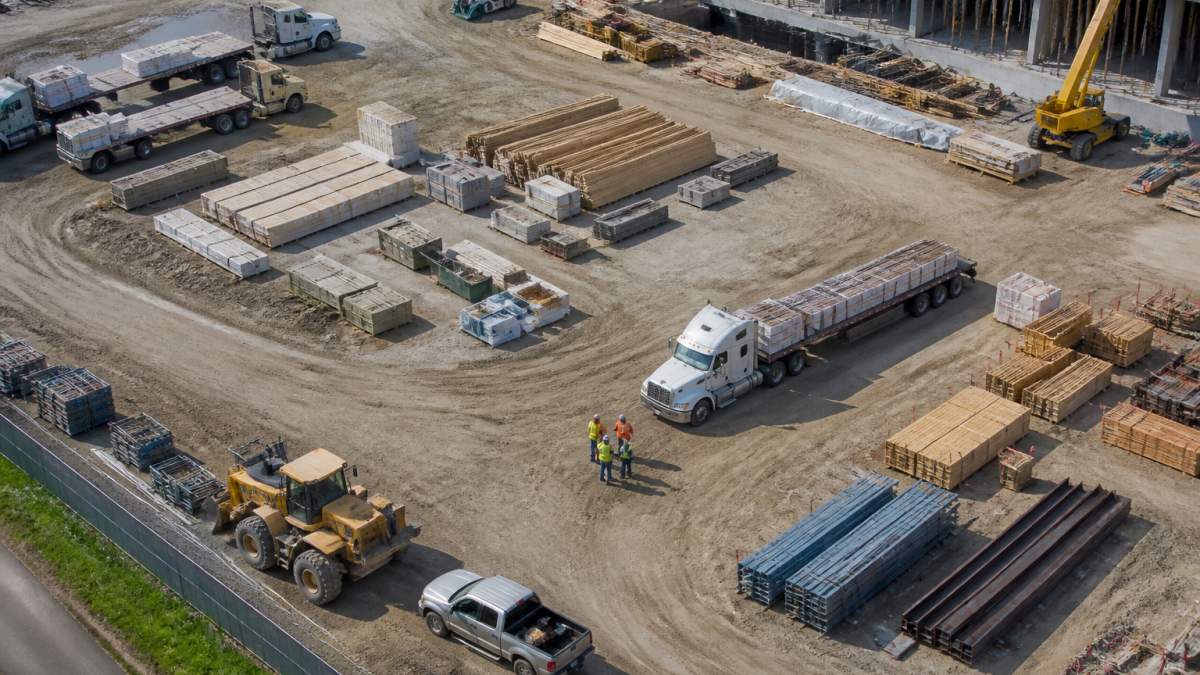
Start with a site map: staging areas away from work zones, marked loading and unloading points, designated truck parking, and clear pathways for equipment. Poor layout forces inefficient movement and double-handling.
Next, create a delivery schedule aligned with construction phases. Material should arrive when crews need it, not weeks early, reducing storage needs and damage or theft risk.
Assign a logistics coordinator to confirm deliveries, track material arrival, and communicate with crews, preventing the chaos of "nobody knew the concrete was arriving today." Field service software like SolvPro centralizes delivery information, work orders, and crew schedules so everyone sees the same information.
Document supplier contacts, typical lead times, and backup suppliers for critical materials. If your primary concrete supplier can't deliver, you need an alternative lined up.
Optimizing Construction Delivery Scheduling to Reduce Congestion
Congestion kills efficiency and inflates emissions: trucks arriving simultaneously, idling while waiting to unload, and bottlenecking site entrances wastes time and fuel.
Stagger deliveries by material type and project phase, concrete Monday morning, lumber Wednesday afternoon, equipment Friday, spreading demand across the week and reducing trucks waiting in line.
Consolidate where possible: ask suppliers to combine three separate deliveries into one. Fewer trips means lower emissions per unit, and many suppliers will consolidate for a discount.
Track on-time delivery performance. If a supplier consistently arrives late, address it or find an alternative.
Reducing Emissions Through Modal Shift and Alternative Fuels
On a site-preparation project, the emissions profile looks nothing like a general supply chain.
Start with the machines, not the trucks. On most grading and excavation jobs, off-road diesel equipment burns more fuel than every delivery vehicle combined. The U.S.
Then attack the haul. On a cut-and-fill site, the biggest emissions decision is whether you can balance dirt on-site: every cubic yard kept on the property is a yard not trucked off and a yard of import not trucked in.
Modal shift applies to bulk materials. Aggregate, cement, and structural steel often travel long distances.
Alternative fuels and vehicles for deliveries. For local fleets, compressed natural gas (CNG), renewable diesel, and battery-electric trucks are increasingly available.
A note on dust and air quality. Fugitive dust from earthmoving, haul roads, and stockpiles is regulated in many jurisdictions and is a genuine community-relations issue. Water haul roads and active work areas, cover or seed stockpiles sitting more than a few weeks, and reduce vehicle speeds on unpaved surfaces. These controls cut particulate emissions and often satisfy permit conditions.
Using a Construction Site Sustainability Checklist for On-Site Controls
A sustainability checklist keeps your team accountable and prevents backsliding when pressure mounts. Use it daily.
Construction Site Sustainability Checklist:
- All material deliveries logged with arrival time, unload time, and staging location
- No trucks idling for more than 5 minutes, drivers turn off engines while waiting
- Material staging areas organized by use phase to minimize double-handling
- Damaged or excess materials documented and removed promptly (not left to rot on-site)
- Crew briefed on material locations and handling procedures
- Delivery coordinator confirms next day's arrivals by 4 PM
- Weekly review of delivery performance vs. schedule
- Waste streams separated for recycling or proper disposal
- Site traffic flow reviewed for congestion points; adjustments made as needed
Post this checklist on-site and review it weekly with your crew. Assign ownership, someone checks each item and reports findings. Digital tools like SolvPro make this easier by centralizing checklists, automating reminders, and creating an audit trail.
Construction Waste Reduction and Material Traceability
Waste on construction sites often exceeds 20% of delivered materials, concrete scraps, lumber offcuts, packaging, and damaged goods.
Implement material traceability from delivery to use: when concrete arrives, log quantity, location, and crew; when work completes, confirm used versus wasted.
Use this data: standardize the practices of crews that minimize waste, negotiate better packaging or switch suppliers that deliver damaged goods, and adjust ordering quantities for high-waste materials.
Partner with a local recycling facility that accepts construction materials, concrete, metal, wood, cardboard, and make on-site separation easy. Divert waste from landfills and recover value from materials you've already paid for.
Track recycling volume monthly for sustainability reporting; it often qualifies projects for green building certifications or owner incentives.
Measuring and Reporting Sustainability Performance
Generic logistics metrics, deliveries per week, on-time percentage, do not tell you whether a site-preparation project is actually running sustainably. You need metrics tied to earthmoving, hauling, and material handling. Establish a baseline before mobilization, then track these on a weekly cadence.
Site-preparation KPIs worth tracking:
- Fuel use per machine-hour, total gallons (or kWh for electric equipment) divided by operating hours for each piece of equipment. This is the single most useful equipment-efficiency metric because it normalizes for how hard the machine is working. A rising trend usually means excessive idling or a poorly matched machine for the task.
- Equipment idle time percentage, idle hours divided by total engine-on hours. Many contractors find idle time in the 30-40% range; a reasonable target is under 20%. Telematics on late-model equipment reports this automatically.
- Emissions per ton moved, total project emissions divided by total tons of material moved (cut, fill, import, export). This lets you compare logistics strategies across projects and phases.
- Truck utilization rate, payload carried divided by legal payload capacity, averaged across all haul and delivery trips. A fleet averaging 60% utilization is leaving emissions and dollars on the table.
- Delivery on-time percentage, arrivals within the scheduled window. Target 95% or better; late and early arrivals both create rework and idle time.
- Waste diversion rate, tons diverted from landfill (recycled, reused on-site, or beneficially reused) divided by total waste tons generated. Track concrete, asphalt, metal, clean wood, and cardboard separately.
- Cut-and-fill balance ratio, on-site material reused divided by total material moved. Higher is better; a balanced site approaches 1.0 for the earthwork scope.
- Water use for dust control, gallons per acre per day, or total water truck loads. Useful where water is scarce or metered.
How to collect the data without adding headcount. Modern equipment telematics (available on most machines built in the last decade) report fuel burn, idle time, and location automatically.
Report against a baseline, not an absolute. The first month of data is your baseline.
Tie reporting to what owners and regulators actually ask for. Project owners pursuing green building certification, and public agencies with sustainability requirements, increasingly ask for construction-phase reporting on waste diversion, equipment emissions, and dust and stormwater compliance.
A short reporting template. A one-page weekly report covering fuel per machine-hour, idle percentage, truck utilization, on-time deliveries, and waste diversion is enough to keep the project honest and to build a defensible record. Keep it consistent across projects so you can compare performance over time.
Frequently Asked Questions
What does sustainable site preparation involve?
Sustainable site preparation integrates environmental responsibility into every logistics decision: planning efficient delivery routes, consolidating freight shipments, choosing lower-emission transport modes, and managing waste on-site. It means assessing your current supply chain operations, setting clear sustainability goals, and tracking greenhouse gas emissions throughout the project. The goal is to minimize your carbon footprint while maintaining schedule and cost efficiency.
How can a construction site logistics plan reduce project delays?
A well-designed construction site logistics plan coordinates material delivery, equipment staging, and crew access to prevent bottlenecks. It specifies entry routes, unloading zones, temporary storage areas, and traffic patterns. By scheduling deliveries during off-peak hours and consolidating shipments, you reduce site congestion. Clear communication through digital tools like work orders and crew tracking ensures everyone knows where materials are and when they arrive, cutting wait times and keeping crews productive.
What should be on a construction site sustainability checklist?
A construction site sustainability checklist covers waste segregation (recyclables, hazardous materials, compost), dust and emissions controls, water runoff management, responsible sourcing of raw materials, and energy-efficient equipment use. It includes daily inspections of fuel storage, idling prevention, and supplier collaboration protocols. The checklist should also document material traceability, track fuel consumption, and record recycling volumes. Use it to verify compliance with local environmental regulations and to measure progress toward your sustainability goals.
How does construction delivery scheduling affect site efficiency?
Construction delivery scheduling coordinates when trucks arrive, where they unload, and how materials are staged. Poor scheduling causes congestion, equipment downtime, and safety hazards. Optimized scheduling spaces deliveries to avoid peak traffic, groups similar materials together, and aligns deliveries with crew readiness. Digital tools help dispatchers adjust schedules in real time, communicate with drivers, and track delivery performance. This reduces idle time, improves energy efficiency, and lowers fuel consumption.
What are practical ways to reduce construction waste on-site?
Construction waste reduction starts with accurate material takeoffs to avoid overordering. On-site, segregate waste into recyclables, compost, and landfill streams. Partner with suppliers who accept packaging returns. Donate usable scrap to community organizations. Track waste volumes weekly and set reduction targets. Educate crews on proper handling to minimize breakage. Consider prefabrication or just-in-time delivery to reduce on-site storage waste. Digital work orders help crews know exactly what materials to bring, cutting excess and improving resource efficiency.
How can I measure sustainability performance on a construction project?
Track key performance indicators: total fuel consumption (gallons), greenhouse gas emissions (tons CO2e), waste diverted from landfills (pounds), and on-time delivery rates. Record miles traveled, modal shift percentages (rail vs. truck), and supplier compliance scores. Use project logistics data to calculate cost per ton-mile and energy efficiency metrics. Compare actual performance against your sustainability goals monthly. Digital platforms can automate data collection from work orders, delivery logs, and crew reports, making measurement faster and more accurate.
Why is supplier collaboration important for sustainable site preparation?
Suppliers control material sourcing, packaging, and delivery methods. Collaborating with logistics partners on responsible sourcing ensures materials meet environmental standards. Work with them to consolidate shipments, use alternative fuels, and optimize routes. Transparent communication about project timelines and material needs lets suppliers plan efficient deliveries. Supply chain transparency and traceability help you verify that materials come from compliant sources. Strong supplier relationships also unlock data analytics that reveal cost-reduction and emissions-reduction opportunities you might otherwise miss.